Fallow: Evenings at Tillage
Fallow /făl′ō/ — land that has been prepared for planting but intentionally left uncultivated to improve soil health.
On this day in 1989, Tim Berners-Lee invented the World Wide Web (contrary to popular opinion, ‘twas not Al Gore). On par with the wheel, sourdough bread, and indoor plumbing (I’m pretty sure Mr. Gore invented at least one of these), the invention of the WWW as a magic portal to the Internet might be the most impactful invention in the history of humanity.
The internet (yes, we do understand that THE INTERNET is a different thing than the World Wide Web, and yet we are going to use them interchangeably; and we shall also use the royal we; deal with it.) began as a passing curiosity, a fad, but access to the digital frontier is now universally hailed as the single thing that can drag someone out of poverty, out of ignorance, out of inequality. This is self-evidenced by governments', nonprofits', and wealthy individuals' insatiable focus on solving every societal ill by expanding access to this very thing.
Most of our jobs directly depend on unfettered, speedy access to this dark magic. Virtually all work in the Western world requires constant sacrifices of fiber, cable, power, and time to this mercurial god in the hopes that it might condescend to grant us mere mortals access to its power and might and wisdom.
Then came social media, riding on its back like a dark horseman of the apocalypse and whispering promises of worldwide connection, understanding, and empathy — as we share together, we'd grow in our understanding and acceptance and love for one another.
[cough cough]
On we go as the other horsemen rode on (and often very quickly off) the stage: web3, the metaverse, crypto, and now AI — each promising unfettered abundance and the democratization not just of information, but of wisdom, even the death of death itself—all built on the back of a digital god made in our own image. And while we may be flawed, it shall surely achieve perfection. For that which is dead can never die. Wait, sorry, wrong apocalypse.
"This (the democratization of knowledge) is something we've heard throughout the era of the internet. We're going to have all this info accessible to everyone and we're going to have this explosion of creativity. We heard it again with social media. We're going to have this explosion of communication and we're going to understand each other better. And it hasn't worked out."
— Nicholas Carr, author of Superbloom
Now, to be fair, I do think the promises have come true in part, in slices, in snippets and tidbits — but never in as many spades as promised and certainly not without tradeoffs and downsides that no one seems able to foresee, even though we (humanity) have paid the price over, over, over again. The quarter drops into the jukebox, What’s New Pussycat plays for the 8th time, and everyone at the diner is somehow surprised. Again? Who could have foreseen?
Apologies if that last sentence was weird; it is a pretty esoteric cultural reference. IFKYK.
Now, I should pause and deal with some judgment I feel in the room. This guy's a Luddite, you say. He's anti-tech. I bet he's pecking this post out on a typewriter (an L3 Smith-Corona portable manual typewriter to be precise). He wants us all ploughing fields with asses while plopping our own asses in outhouses.
No.
No.
Just no.
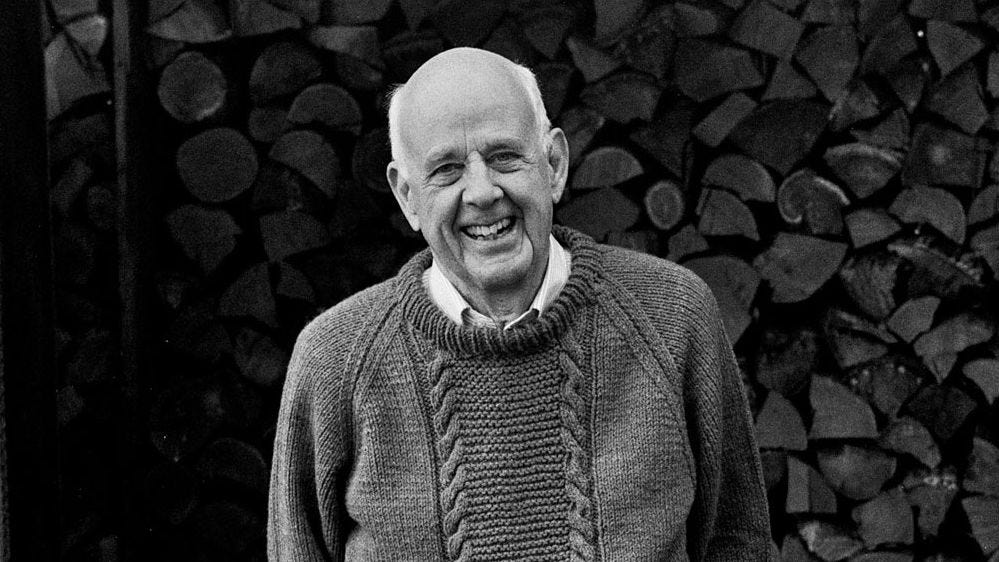
But (not that butt; get your mind out of the outhouse), as Wendell Berry so eloquently pecked on his own manual typewriter:
"I am not 'against technology' so much as I am for community. When the choice is between the health of a community and technological innovation, I choose the health of the community."
My life has been greatly improved by the internet. I imagine yours has too.
I’m old enough to have seen the corpses of the browser wars piling up in the dozens of AOL cds littering the streets of my hometown.
I am old enough to have fought for primacy of the family landline in order to dial-up to the WWW only to then watch a website render one row of pixels by painfully slow row of pixels.
The olden days are not always the glory days.
My livelihood today is possible because of this invention. But — you knew that a big o’l BUT was coming, didn't you? — there are always tradeoffs. And wisdom (true wisdom, not [scare quote] wisdom [end scare quote] prompted from an entity named Claude) requires acknowledging that there are always tradeoffs, often, they are costly, and often, those costs are unknowable at the time of the decision.
The ability to be online anywhere prevents us from being present. Here. Now.
The ability to do anything from anywhere prevents us from being present. Here. Now.
The ability to connect with anyone anywhere prevents us from being present. Here. Now.
And so I live a life where I am everywhere but here. Where better is over there. Or maybe there.
This may not feel like a solace, but this challenge of our digital age is not a new thing. Al Gore did not invent the winter of our discontent. While we may feel it deeply right now in an era of now and always, mathematician, physicist, inventor, and philosopher Blaise Pascal posted this idea on his own blog nearly 400 years ago. Writing in the mid-1600s, Pascal writes of our inability to be present:
"We do not rest satisfied with the present. We anticipate the future as too slow in coming, as if in order to hasten its course; or we recall the past, to stop its too rapid flight…. We wander in the times which are not ours, and do not think of the only one which belongs to us…. We scarcely ever think of the present; and if we think of it, it is only to take light from it to arrange the future. The present is never our end. The past and the present are our means; the future alone is our end.
So we never live, but we hope to live; and, as we are always preparing to be happy, it is inevitable we should never be so."
—Blaise Pascal, Pensées #172
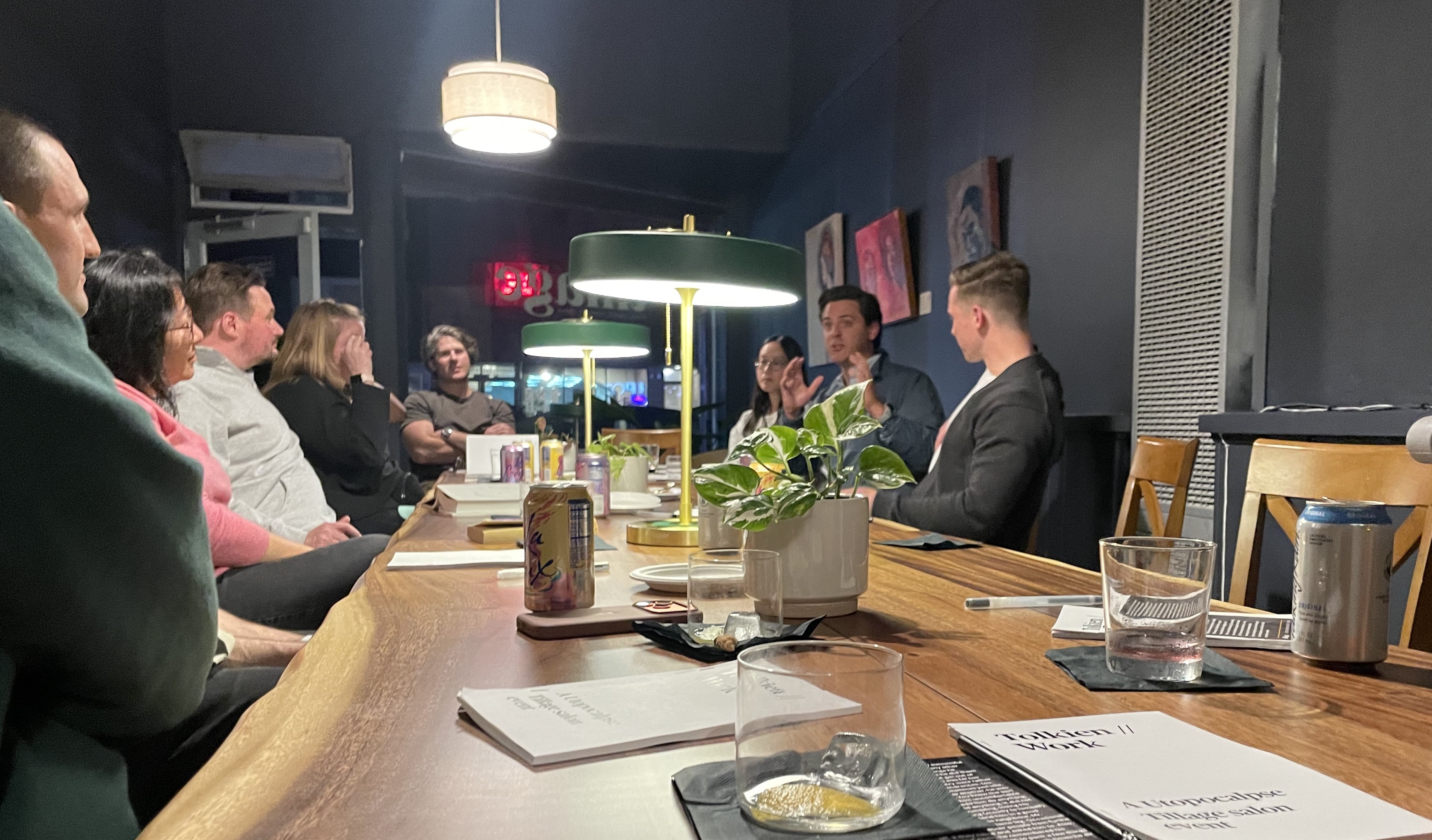
The integration of place and purpose and people is at the heart of why Tillage exists. It is a place for work, yes, but also so much more. It's rootedness. It's presence. It's a sacred pause in the middle of a city that says more, more, more. And then more.
The digital fields that surround us never lie fallow. They are planted, tended, harvested always, everywhere, forever. And we are not the ones farming. We are being farmed.
It would seem that we, mere humans, are not built for more, more, more. It would seem — perhaps, maybe — that limits are not only a current reality but a necessary good to be protected, cultivated.
Which is why, as the Web turns 35 today (the first website went live August 6, 1991 — happy birthday, you complicated marvel), we're announcing Fallow: Evenings at Tillage.
Twice weekly. Analog first — no phones, no smart glasses, no data-maxxing. Nothing to measure, nothing to post. Nothing tethered to the ghost of Tim Berners-Lee (he’s not dead).
Each night, we set the intention and you fill it with your presence.
Intentionally intimate (limited to 25 humans).
$10 per person (free for Tillage members).
No Tillage membership required.
When you need a hard reset from the exhaustion of producing, from the constant connectedness, from the insatiable hunger of more — Fallow is waiting for you.
Let’s do something unmeasurable. Together.
Launching August 24. Visit tillage.place/fallow for weekly rhythms and to reserve your spot.